 Tours from Marrakech to Merzouga
Home › Guides › Merzouga Weather by Month and the Best Time to Go
Merzouga Weather by Month and the Best Time to Go
Spring and autumn give the kindest Merzouga weather for a desert night: warm days, mild nights and little rain, with October the wettest month at nearby Errachidia at only 20.8 mm. Summer is the hottest and driest season, and winter nights in the dunes turn cold.
Quick answer Best months, rain and night cold in brief
Spring and autumn are the best seasons for Merzouga weather, and the region is dry all year, with about 133 mm of rain at Errachidia. At Errachidia, the nearest weather station, October averages a 26.8 C high and a 14.2 C low, which is the pattern to plan around: warm afternoons on the dunes and cool nights at camp. Pack a warm layer in every season.
Key takeaways
- Cool months suit a camp night best: compare tents on the 3-Day Merzouga Desert Tour from Marrakech with a Luxury Camp.
- Short on time in winter: the 2-Day Merzouga Desert Trip from Marrakech, Back to Marrakech or on to Fes runs 38 hours.
- Want two desert nights in mild spring weather: the 4 day desert tour with 2 nights in the desert.
- Compare every Marrakech to Merzouga tour by length, camp and price.
What Is the Weather Like in Merzouga?
Merzouga is dry and sunny most days, with warm afternoons and cool nights, so check a 10 to 14 day forecast a few days before you leave.
Live forecast sites cover Merzouga well. Use one for the days you travel and the seasonal picture below for planning.
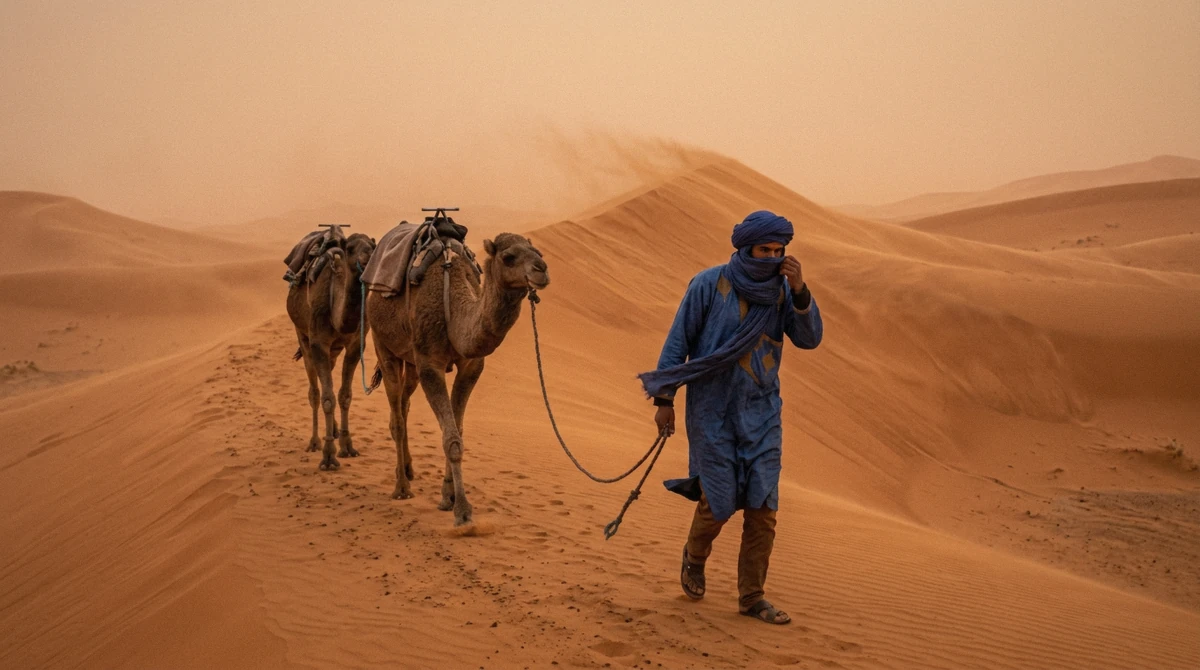
A spring sand wind at Merzouga: a scarf over the face helps.
Temperatures by Season at Errachidia
The table gives the long-term averages for Errachidia, the nearest weather station to Merzouga with published 1991-2020 normals. The dunes sit lower and further into the desert, so treat the figures as a guide, then check a live forecast a few days before you leave.
| Months | Day high | Night low | What it means |
|---|---|---|---|
| March | 22.1 C | 8.8 C | Mild days, cool camp nights |
| April | 26.1 C | 13.0 C | Warm days, comfortable nights |
| June to August | 35.4 to 39.5 C | Not in the published figures | Hot: the ride runs at sunset and sunrise |
| October | 26.8 C | 14.2 C | Warm days, the wettest month at 20.8 mm |
| November | 20.6 C | 7.7 C | Mild days, cold nights |
| December and January | Not in the published figures | 3.5 C and 2.0 C | Cold nights in the tent |
Reading a Desert Forecast
The gap between day and night is the number that matters. An October day of 26.8 C with a night of 14.2 C at Errachidia means a shirt on the afternoon camel ride and a fleece by the campfire. Look at wind too.
A breezy afternoon lifts sand on the dunes, while sunrise is usually the calmest hour.
Source: Norwegian Meteorological Institute.
Which Month Is Best to Visit the Sahara Desert?
March to May and September to November are the best months, with October bringing the most rain of the year at only 20.8 mm.
The rain figures come from Errachidia, the provincial town on the road in from Midelt.
Merzouga Weather by Season
The table groups the months by season, with the rain figures Errachidia records and what each season means for a night at a desert camp in Erg Chebbi.
| Season | Months | Rain at Errachidia | For a camp night |
|---|---|---|---|
| Spring | March, April, May | Part of the 133 mm yearly total | Warm days, mild nights, a good season to go |
| Summer | June, July, August | July is the driest month at 3.1 mm | The hottest season, so ride at sunset and sunrise only |
| Autumn | September, October, November | October is the wettest month at 20.8 mm | Warm days, cooling nights, a good season to go |
| Winter | December, January, February | Part of the 133 mm yearly total | Cold nights in the tent, flood risk on mountain roads |
September, November, December and February
September opens the autumn season, with summer heat easing week by week. November nights average 7.7 C at Errachidia, so a warm layer is essential. December and February are winter months: days on the dunes stay pleasant, but the night in a tent turns cold and the drive over the mountains takes more care.
The Errachidia to Midelt to Merzouga leg alone covers 303.0 km and 4 h 20 min on the tourist office's Desert Break route, so winter weather on the road matters as much as weather in the dunes.
Sources: Norwegian Meteorological Institute, Visit Morocco, GOV.UK Foreign Travel Advice.
Does It Rain in Merzouga?
Rarely: nearby Errachidia gets about 133 mm of rain a year, though short showers do pass over the dunes.
Rain is not a reason to avoid the desert, but it can slow the road in.
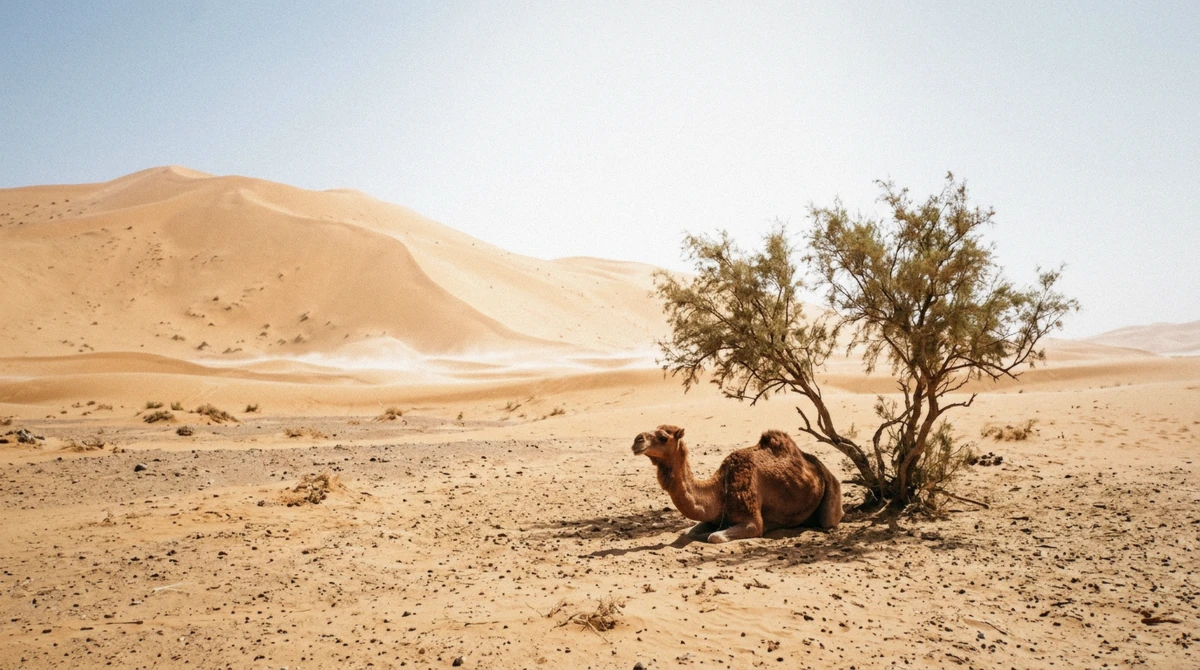
Summer midday in the dunes, when tents pass 40 C.
How Much and When
Errachidia records about 133 mm of rain a year. October is the wettest month at 20.8 mm and July the driest at 3.1 mm. Showers do reach the dunes, usually short and followed by clear sky.
On most days the chance of rain is low, and July averages only 3.1 mm at Errachidia.
When Rain Matters
The risk is on the mountain roads, not at camp. The UK FCDO says flash flooding in mountains and near rivers can make walking and driving dangerous, mainly in winter, and that secondary routes and mountain roads can be especially hazardous in poor weather. If heavy rain is forecast in winter, a 3-day tour such as the Marrakech to Merzouga 3-Day Desert Tour with Camel Trek at $114.05 per person splits the drive over more daylight than a 2-day trip.
Sources: Norwegian Meteorological Institute, GOV.UK Foreign Travel Advice.
How Cold Is the Sahara Desert at Night?
Colder than most travellers expect: even in autumn the night can drop to around 14C, and winter nights in a tent are colder still.
Sand loses its heat fast after sunset, and a desert camp has no walls to hold it.
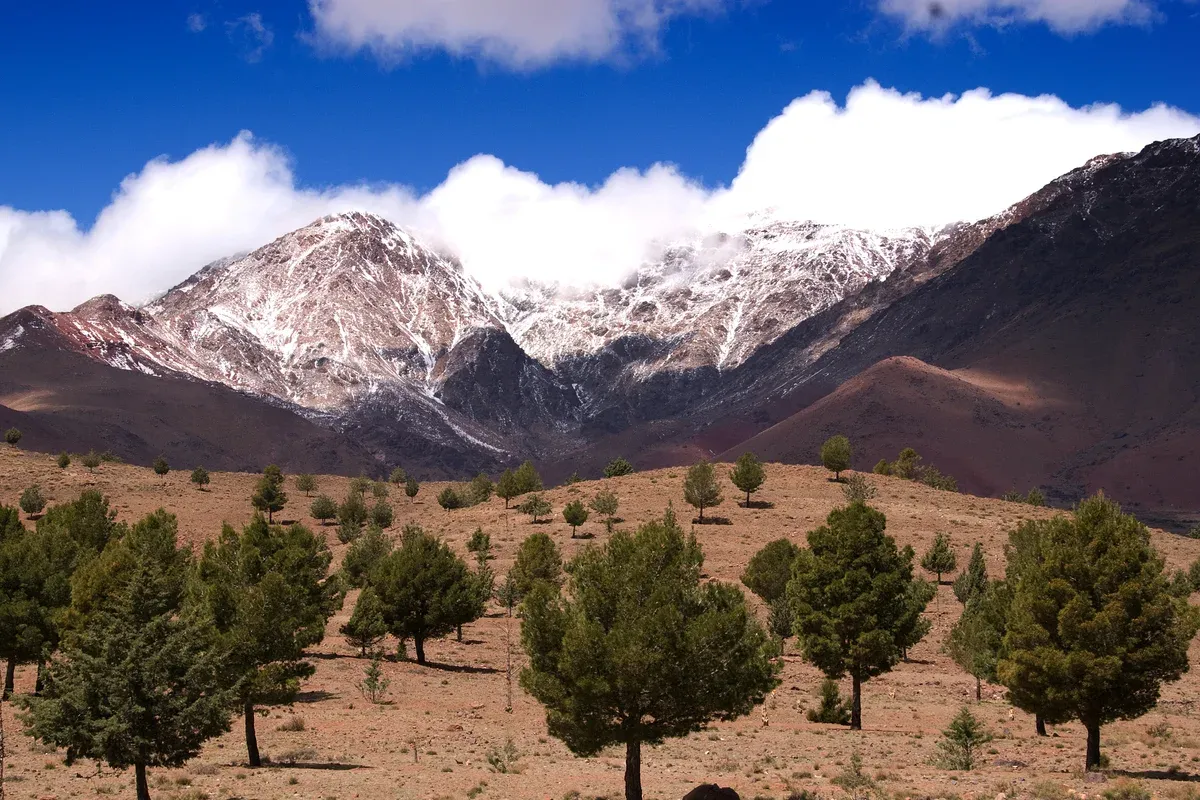
The High Atlas in winter from the Tichka road. Photo: Michal Osmenda from Brussels, Belgium, CC BY-SA 2.0, via Wikimedia Commons
From Sunset to Sunrise
The camel ride into camp starts near sunset and the ride back starts before sunrise, the two coolest parts of the day. At Errachidia the October night averages 14.2 C and the January night 2.0 C, with a recorded minimum of -8.1 C. Add the breeze on a camel's back and the dune tops, which rise up to 150 m above the surrounding plain, and a fleece is the item you will use most.
In winter, choose a camp tier with care. The 3-Day Merzouga Desert Tour from Marrakech with a Luxury Camp at $148.26 has a private bathroom in the tent, so there is no cold walk outside at night.
Source: Norwegian Meteorological Institute.
Tours That Fit
Three tours for different seasons: the cheapest, the classic round trip and the luxury tent for cold nights.
Budget 3-Day Merzouga Desert Tour with a Private Tent
The cheapest seat to the dunes with reviews behind it: a private tent in the camp, a local guide at Todra Gorge and entry tickets included. Up to 40 in the group.
- Category
- 3-day round trip
- Cancellation
- Free cancellation 24h
- Operator
- Sahara Desert Trip
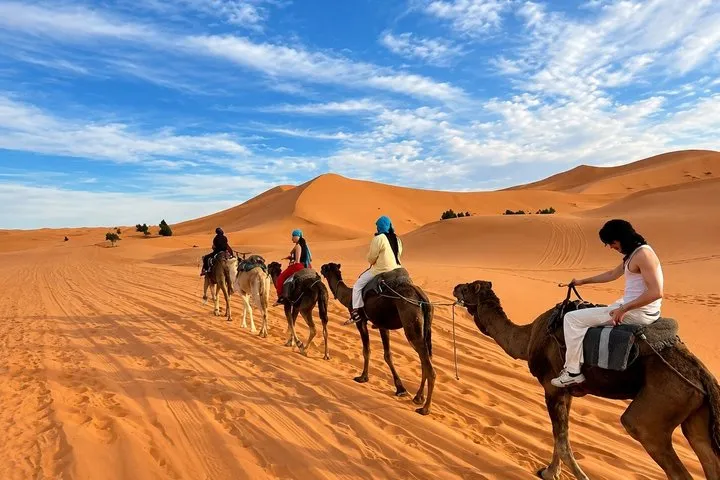
Marrakech to Merzouga 3-Day Desert Tour with Camel Trek
The route most people book: Ait Ben Haddou, a night in Tinghir, Todra Gorge, then a sunset camel ride to a camp in the dunes. Back in Marrakech about 7:30 pm on day 3.
- Category
- 3-day round trip
- Cancellation
- Free cancellation 24h
- Operator
- Morocco Global Adventures
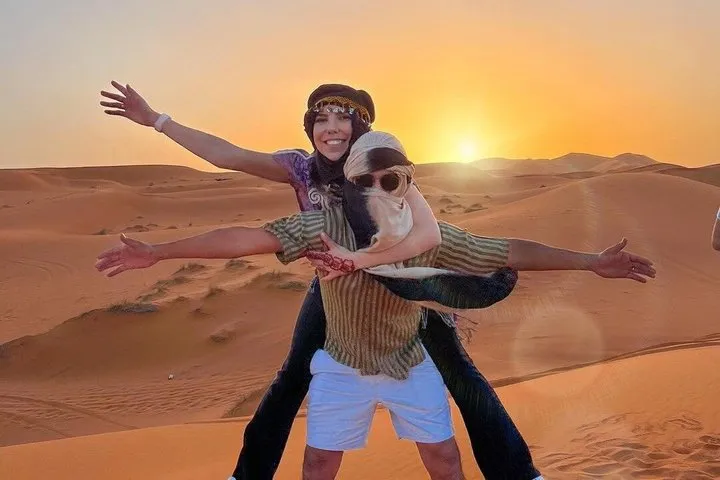
3-Day Merzouga Desert Tour from Marrakech with a Luxury Camp
Sold around a luxury desert tent with its own bathroom (pick that option at checkout), a pool hotel in the Dades Gorge and the Ait Ben Haddou guide already paid.
- Category
- 3-day round trip
- Cancellation
- Free cancellation 24h
- Operator
- Explore Marrakech Trips
How Does the Weather Change a Desert Tour?
Heat decides when you ride, cold decides which tent you book, and rain or snow in the mountains decides how long the drive takes.
Every tour from Marrakech spends long hours on the road before the camel ride.
Picking the Right Length
The table sets each tour length next to how it handles the weather, with per person prices from each listing. The full Marrakech to Merzouga tour comparison adds camps and return cities.
| Tour | Length | Price | Weather fit |
|---|---|---|---|
| 2-Day Merzouga Desert Trip from Marrakech, Back to Marrakech or on to Fes | 2 days, 1 night (38 hours) | $106 | Best in stable spring or autumn weather |
| Budget 3-Day Merzouga Desert Tour with a Private Tent | 3 days, 2 nights | $65 | Mild seasons, when a basic tent is comfortable |
| Marrakech to Fes 3-Day Desert Tour via Merzouga | 3 days, 2 nights | $109 | Avoids driving the mountain road twice in winter |
| Small-Group 3-Day Sahara Tour from Marrakech to Merzouga | 3 days, 2 nights | $141.42 | Any season, with time to spare on the road |
Sources: Visit Morocco, GOV.UK Foreign Travel Advice.
Is Merzouga Desert Safe?
Yes for most travellers on a guided tour, as long as you plan for heat, night cold and winter road conditions.
The weather risks in Merzouga are practical, and each has a simple fix.
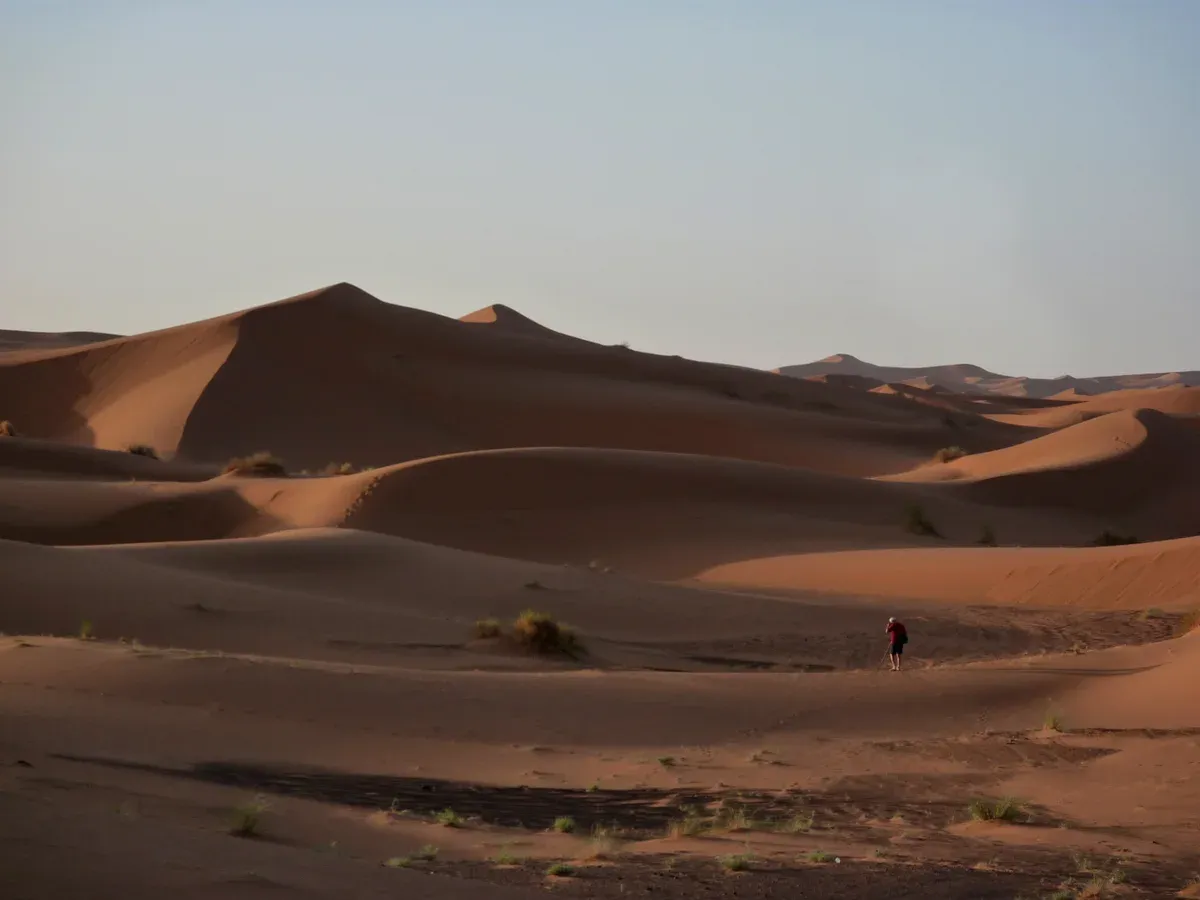
Morning on Erg Chebbi, the coolest hours of a summer day. Photo: Adrian Farwell, CC BY 3.0, via Wikimedia Commons
Weather Risks and Fixes
The UK FCDO warns that poor lighting makes night driving dangerous, so a tour that reaches the dunes in daylight is the safer choice in winter, when days are short. Flash flooding is mainly a winter risk on mountain roads. FCDO also notes that altitude sickness is a risk in parts of Morocco.
If someone feels unwell, the ambulance number is 150, and pharmacies are open 24 hours in every city and district. Public health facilities offer limited care, while private clinics work to a higher standard, so travel insurance is worth having.
Sources: GOV.UK Foreign Travel Advice, GOV.UK Foreign Travel Advice.
What Should You Pack for Merzouga Weather?
Pack for two climates: a sun hat and light layers for the day, and a warm fleece or jacket for the night and the sunrise ride.
Space in a tour van is limited, so bring a small bag for the camp night.
The Desert Night Bag
For a night that falls to 14.2 C in October and near 2.0 C in January at Errachidia, bring a warm top, long trousers, a scarf for wind and sand, sunglasses and sunscreen. Desert air is dry, so lip balm and water help.
The Erg Chebbi dunes run about 28 km north to south. Walking up one for sunrise means soft sand, so closed shoes or sandals you can empty are better than flip-flops. Camps include dinner and breakfast, so food is covered for the night.
Source: Norwegian Meteorological Institute.
Merzouga Weather FAQ
What is the best month to visit Merzouga?
Spring (March to May) and autumn (September to November) give warm days and mild nights. Compare each tour from Marrakech to Merzouga for those months.
Does it rain in Merzouga in October?
October is the wettest month at nearby Errachidia, with 20.8 mm, which still means few rainy days. The Marrakech to Fes 3-Day Desert Tour via Merzouga runs in any weather that month.
How cold is Merzouga in December?
December nights in the dunes are cold, so pack a warm jacket. A private-bathroom tent on the 3-Day Merzouga Desert Tour from Marrakech with a Luxury Camp saves a cold night walk.
Is summer too hot for a Merzouga desert tour?
Summer is the hottest season and July the driest month, with 3.1 mm of rain. Ride at sunset and sunrise only, and book the Small-Group 3-Day Sahara Tour from Marrakech to Merzouga for a gentler pace.
Is there a direct train from Marrakech to Merzouga?
No train runs into the desert. Supratours, the ONCF coach arm, runs buses from Marrakech to the South, or ride the Marrakech to Merzouga 3-Day Desert Tour with Camel Trek at $114.05.
Where can I see a 14-day Merzouga forecast?
Several weather services publish 10 to 14 day forecasts for Merzouga. Check one a few days before you travel, and keep a warm layer whatever it says, since the night is always cooler than the day on the Budget 3-Day Merzouga Desert Tour with a Private Tent.
More Guides
- Ait Ben Haddou: What to See on the Way to Merzouga
Ait Ben Haddou 2027: films, the climb, 1-2 hours on site, no official fee. See which desert tours stop here and plan the day.
- Erg Chebbi Dunes: Height, Size and How to See Them
Erg Chebbi 2027: dunes up to 150 m, about 28 km long, 9 hours from Marrakech. Check the facts and pick the right desert tour.
- How to Get from Marrakech to Merzouga: Distance, Bus, Car and Flights
Bus, car, flight or tour from Marrakech to Merzouga in 2027: the 333.8-mile road, real times per option. Compare the ways and pick yours.